

Cornwall Cottages With Enclosed Gardens: What to Check
An enclosed garden does not always mean escape-proof. Learn what to check when choosing a dog-friendly Cornwall cottage, including boundaries, gates, gaps, shared spaces and nearby livestock.
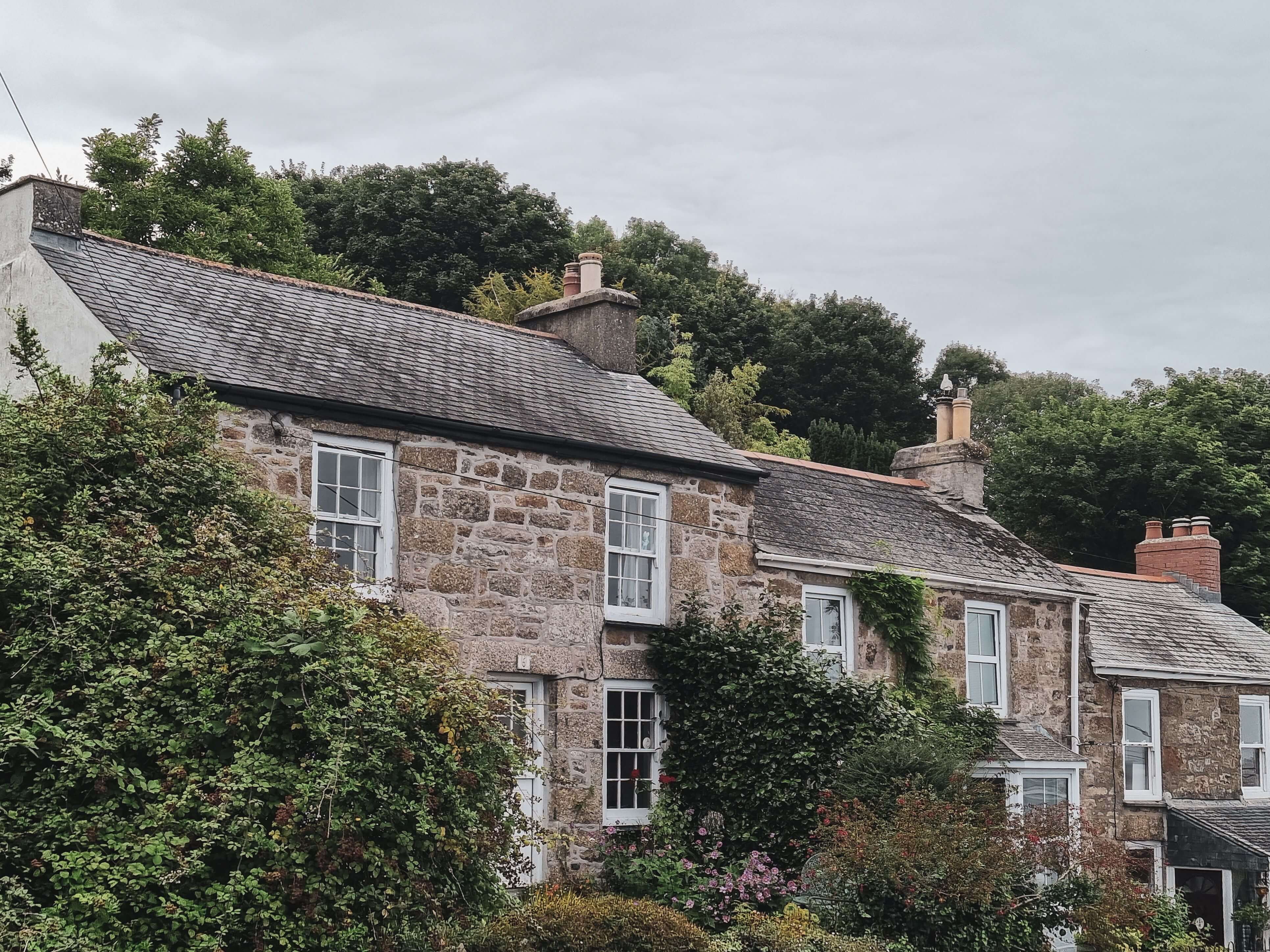
An enclosed garden can be one of the most useful features when booking a Cornwall cottage with a dog.
It can make early mornings easier, provide somewhere to dry off after muddy walks and give your dog private outdoor space between trips out.
But there is an important distinction to understand before booking:
An enclosed garden is not automatically an escape-proof garden.
The boundary could be a stone wall, fence, hedge, gate or a mixture of several types. Its height, condition and suitability will depend on the property and, importantly, on your dog.
Here is what to check before choosing a cottage.
What does “enclosed garden” actually mean?
There is no single garden layout represented by the words “enclosed garden”.
One cottage might have a high stone wall and a solid gate. Another could have fencing and hedges. Another might have a low wall that marks the boundary but would present little obstacle to a dog that can jump.
Sometimes only part of the outside space is enclosed.
This means the useful question is not simply:
“Does the cottage have an enclosed garden?”
It is:
“How is the garden enclosed, and will that work for my dog?”
Six things to check before booking
If the garden is important to you, try to establish these details before making a booking.
1. What forms the boundary?
Look for information about whether the garden is surrounded by:
- fencing
- stone walls
- hedges
- gates
- buildings
- a combination of different boundaries
Knowing the boundary type gives you much more useful information than the word “enclosed” on its own.
2. How high is the lowest boundary?
Height matters particularly for dogs that jump or climb.
A garden can be enclosed while still having a relatively low wall, fence or gate.
If boundary height is important for your dog and the accommodation provider does not state it, treat it as unknown rather than trying to estimate it from photographs.
3. Are there gaps?
For smaller dogs, gaps can matter more than height.
Check for information about spaces beneath gates, between fencing, around hedges and where two different types of boundary meet.
A high fence does not provide much reassurance if your dog can squeeze underneath it.
4. What are the gates like?
Gates can be the weak point in an otherwise well-contained garden.
Useful information includes whether the outdoor space is gated, the type of gate and whether there are gaps underneath or around it.
If the listing does not provide this information and it matters for your dog, ask the accommodation provider.
5. Is the whole outdoor space enclosed?
A cottage may have several outdoor areas.
For example, a rear garden might be enclosed while a front lawn, driveway or patio is open.
Check which part of the property the description refers to rather than assuming every outdoor area is contained.
6. Is the garden private or shared?
This is particularly important if your dog is nervous or reactive around unfamiliar dogs or people.
A private garden and a communal dog-friendly outdoor area can provide very different experiences.
Check whether your dog will have exclusive use of the space.
Different dogs need different gardens
There is no boundary specification that is automatically suitable for every dog.
The details you prioritise should reflect how your own dog behaves.
If your dog jumps or climbs
Boundary height becomes particularly important.
Also look at the ground beside walls and fences. Raised ground, furniture, bins or other objects can effectively reduce the height your dog needs to clear.
If your dog has a history of jumping boundaries, do not rely on the word “enclosed” without further information.
If you have a small dog
Look closely at gaps.
Spaces beneath gates, open railings and gaps within hedges or fencing may matter more than the overall height of the boundary.
If your dog digs
Consider what happens at ground level.
Dogs that are persistent diggers may be able to get underneath some types of fencing or exploit existing gaps.
If escaping by digging is something your dog already does at home, it is worth asking the provider for more detail before booking.
If your dog is reactive or nervous
The garden's surroundings can matter as much as its boundary.
Consider:
- whether neighbouring dogs can be seen
- whether people regularly pass the garden
- whether the space is shared
- how close neighbouring properties are
- whether the garden faces a road
- whether livestock is nearby
A garden can be physically enclosed but still be difficult for a dog that reacts strongly to movement, noise or other animals.
Cornwall cottages near livestock
Many Cornwall cottages are in rural locations, so it is worth checking what lies beyond the garden.
Nearby fields may contain sheep, cattle or other livestock.
For a dog with a strong chase instinct, this can make the quality of the boundary especially important.
It can also affect your walks from the property. You may need to use a lead around livestock even if your dog is normally exercised off lead elsewhere.
If a property description mentions a working farm or neighbouring livestock, take that information into account when deciding whether the location suits your dog.
Don't rely on property photographs alone
Photographs can help you understand a garden, but they rarely prove that the entire boundary is suitable for your dog.
A photograph might show an impressive stone wall on one side while leaving the gate or opposite boundary outside the frame.
Images may also have been taken some time before your stay.
Use photographs alongside the written property information rather than treating them as confirmation that a garden is secure.
If an important detail is missing, ask.
Check the garden when you arrive
Even when you have researched the property carefully, inspect the outdoor space before allowing your dog to explore freely.
Look for:
- open or poorly closed gates
- damaged fencing
- unexpected gaps
- low sections of boundary
- possible escape routes
- hazards within reach of your dog
Conditions can change after photographs and property descriptions are published.
A quick check when you arrive is especially worthwhile if your dog is an experienced escape artist.
Questions worth asking the accommodation provider
You probably will not need to ask every question below. Concentrate on whatever matters for your particular dog.
Useful questions include:
- Is the entire garden enclosed?
- What forms the boundary?
- How high is the lowest section?
- Are there any gaps underneath or within the boundary?
- Is the garden gated?
- Is the outdoor space private or shared?
- Is there livestock immediately beyond the garden?
- Are there any parts of the outside space that are not enclosed?
Specific questions are more useful than simply asking whether the garden is “secure”.
They also give the provider a better chance of giving you information you can actually use.
How Wagabode handles enclosed gardens
Wagabode separates what is known from what has not been confirmed.
If an accommodation provider states that a property has an enclosed garden, Wagabode can show:
Enclosed garden: Yes
That does not automatically mean the garden is being described as escape-proof.
Where the information is available, a property can also include practical details such as boundary type, boundary height and relevant provider notes or warnings.
If an important detail has not been confirmed, we would rather show that than guess.
This lets you decide whether the available information is enough for your dog or whether you need to check something with the accommodation provider before booking.
Find Cornwall cottages with enclosed gardens
If an enclosed garden is one of your priorities, use Wagabode to narrow down Cornwall stays using practical dog-specific requirements.
Then look beyond the headline feature.
Check the boundary information available, consider your dog's behaviour and confirm anything important that remains unclear before booking.
The goal is not simply to find a cottage that accepts dogs.
It is to find one that actually suits yours.